
How do Depth Filters Work?
Depth filters achieve efficient removal of impurities and particles from fluids through their unique depth filtration mechanism, providing reliable filtration solutions for the pharmaceutical industry. In this Alioth “Deep in, Clear out“ Knowledge Series, we will explain how depth filters operate.
The removal of particles in depth filters occurs simultaneously on the surface and within the internal structure of filtration medium. The removal of particles is determined by the depth and tortuosity of the flow channels, as well as the size of the particles. These characteristics enable depth filters to achieve high efficiency and large loading capacity in particle removal.
Retention Mechanism
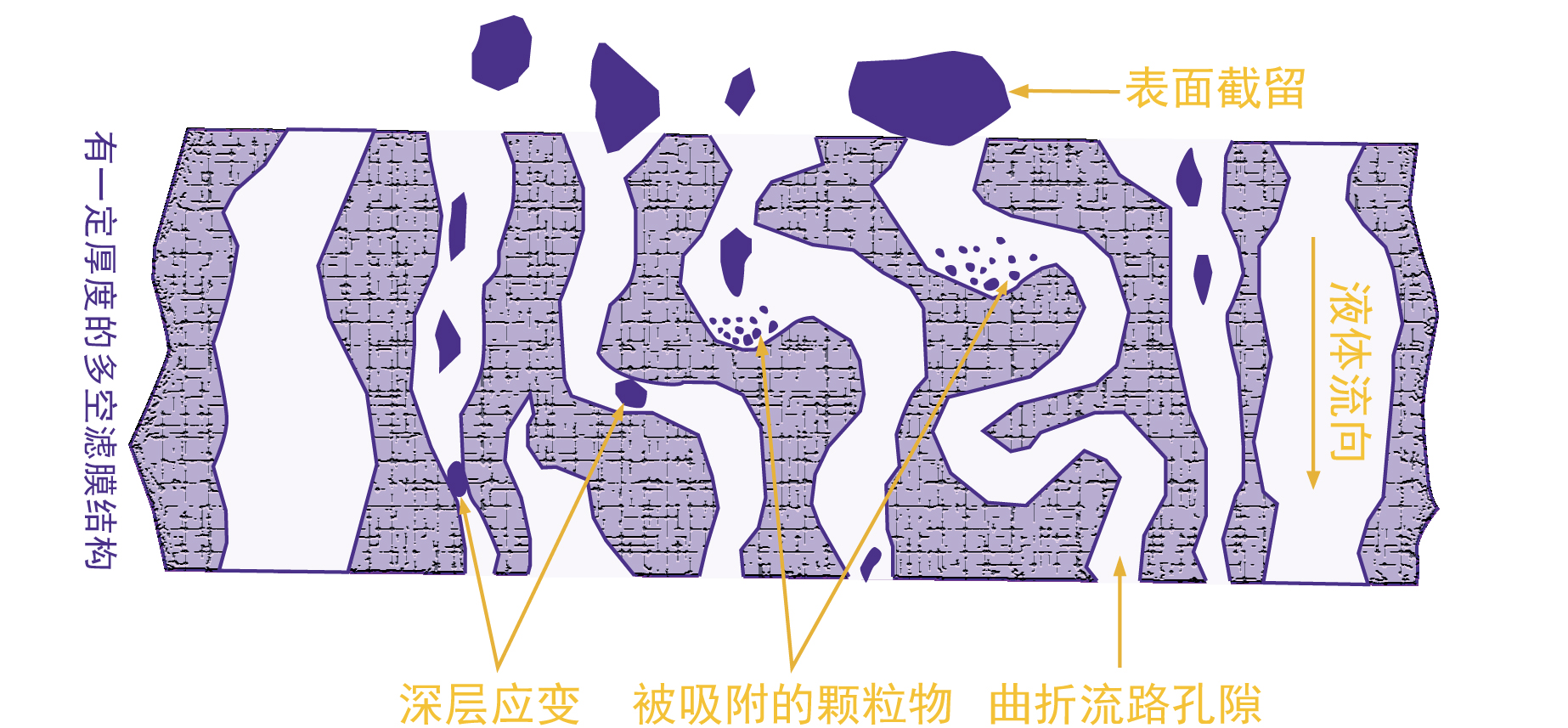
Typically, most particles naturally carry a negative charge, so using positively charged filtration media can effectively remove smaller-sized particles. Charge modification enables the filter to efficiently remove particles and colloids without significantly affecting loading capacity or pressure, while also effectively eliminating negatively charged trace contaminants such as endotoxins and nucleic acids introduced during fermentation processes.
Factors Influencing Depth Filter Performance:
- Medium Characteristics
The material, structure, porosity, and surface area of the filtration medium directly impact the filteration efficiency.
- Liquid to Be Filtered
The viscosity, density, pH, and temperature of the liquid influence filter performance.
- Target Particle Type
Particle size, shape, density, and chemical properties affect retention efficiency and filtration rate.
- Process Chemistry
Chemical reactions (e.g., adsorption, ion exchange, redox) during filtration may alter filter performance and modify the properties of both the filtration medium and target particles.
Depth filters, due to their structure and chemical composition, typically incorporate two primary clarification mechanisms:
- Size exclusion, achieved through sieving or retention.
- Adsorption, driven by electrokinetic or hydrophobic interactions.
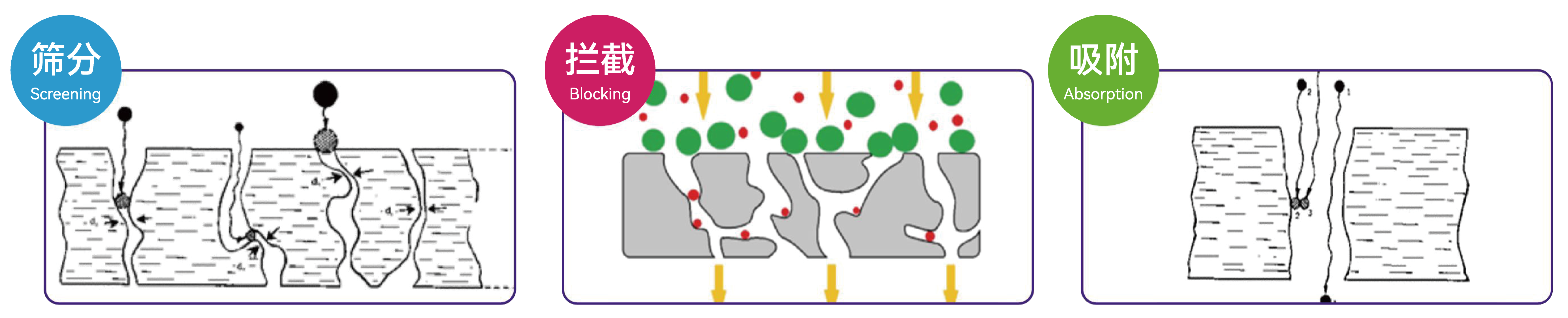
Size exclusion is relatively straightforward to understand. Below are factors influencing adsorption in depth filtration:
- Charge-dependent adsorption
The charge state of particles, the charge characteristics of the filtration medium, and the charge distribution in the surrounding environment all affect charge-dependent adsorption.
- Hydrophobic adsorption
The salt concentration of the fluid, the hydrophobic properties of solutes, and the quantity and distribution of hydrophobic groups on the adsorbent all influence hydrophobic adsorption effectiveness.
- Surface charge and ionic strength
Factors such as the surface charge distribution of the filtration medium, the ionic composition and concentration of the fluid, and the pH of the environment all affect how surface charge and ionic strength impact adsorption.
Parameters influencing the adsorption performance of depth filters typically include:
- Filter material
Different materials possess distinct surface characteristics and pore sizes, which determine the filter’s adsorption capacity for particles and its overall filtration performance.
- Components of the pharmaceutical solution and buffer to be filtered
Chemicals in the pharmaceutical solution and buffer may interact with the filter material, affecting its adsorption performance.
- Process parameters
Operating conditions such as filtration rate, temperature, and pressure all influence the adsorption performance of depth filters.

